











Documentation Index
Fetch the complete documentation index at: https://docs.qontext.ai/llms.txt
Use this file to discover all available pages before exploring further.
Overview
Data Sources allow you to feed your Context Vaults with data from the tools you already use. You can use native connectors (e.g. HubSpot, Google Drive, Notion) for continuous sync, or ingest via the API when a connector isn’t available. Data is structured and stored in the vault so it’s ready for retrieval. Sync logs in the platform let you monitor runs and troubleshoot.Usage
Connect tools via native connectors
Open Data Sources in your vault
To add a data source, open the vault in the Qontext app, go to the Data Sources tab, and click + Add in the top right corner.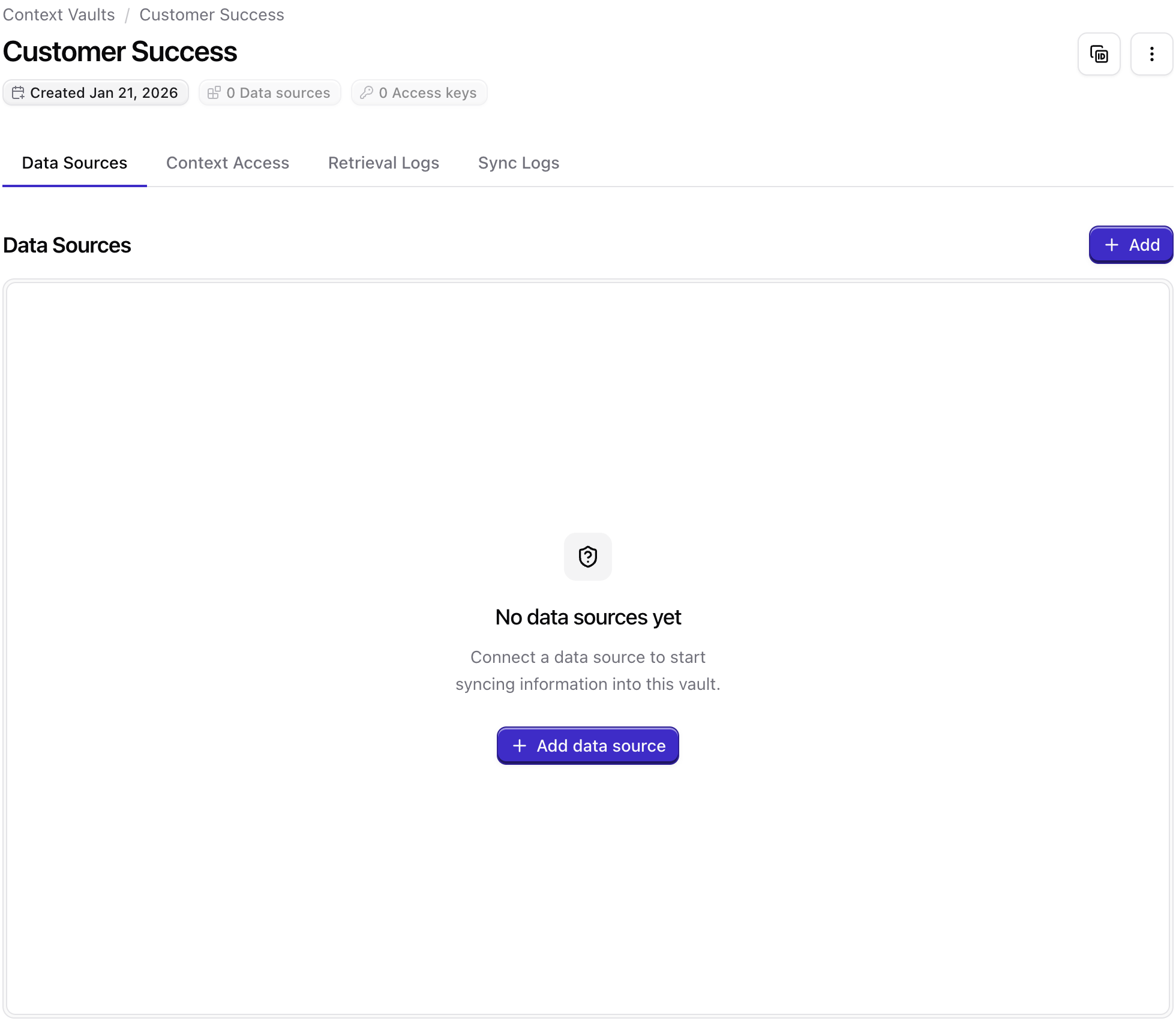
Choose the tool you want to connect
Choose the tool you want to connect. You can set filters per data source to control what gets synced. For setup instructions for a specific connector and a roadmap for our upcoming connectors, see the Data Connections section, e.g.:
If a source isn’t natively available
- Use the ingestion endpoints: To ingest data into any Context Vault when a connector isn’t available, call the API. Create the required API key in your vault under Context Access. See the API Reference for endpoints and examples.
- Request a native connector: To request a connector we don’t offer yet, submit a request here. We’ll try our best to build a connection for you.
Sync logs in the platform
To see when a sync started and finished, check for errors or skipped items, and see which source or connection triggered it, use the Sync Logs tab in the vault in the Qontext app. For API access, see the Sync Logs endpoints.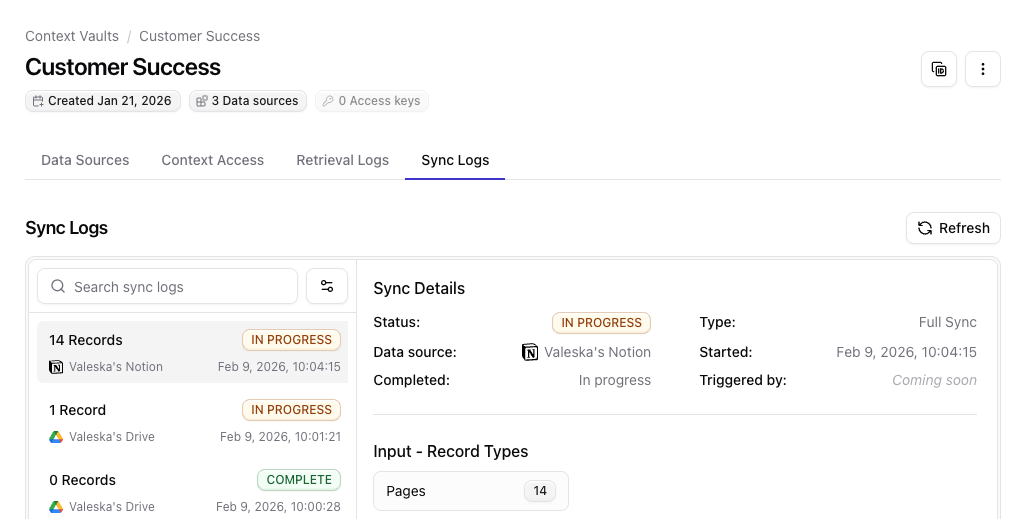
Best practices
Prefer native connectors when availableThey keep the vault in continuous sync with minimal setup. Use the Connections overview to see what’s available.
Monitor sync logsCheck sync logs after large or first-time syncs to confirm success and spot configuration or permission issues early.
FAQ
What if my sync fails?
What if my sync fails?
Trigger a resync. If the issue persists, contact support@qontext.ai, so that we can resolve the issue.
How long does a sync take?
How long does a sync take?
It depends on the data volume of your sync. Initial syncs with large amounts of data can take up to 12 hours. Subsequent syncs process incremental changes and typically complete much faster than the initial sync.